2026-10-03 · Brandon
Crawl Space Encapsulation in Broken Arrow: Costs, Benefits and When You Need It
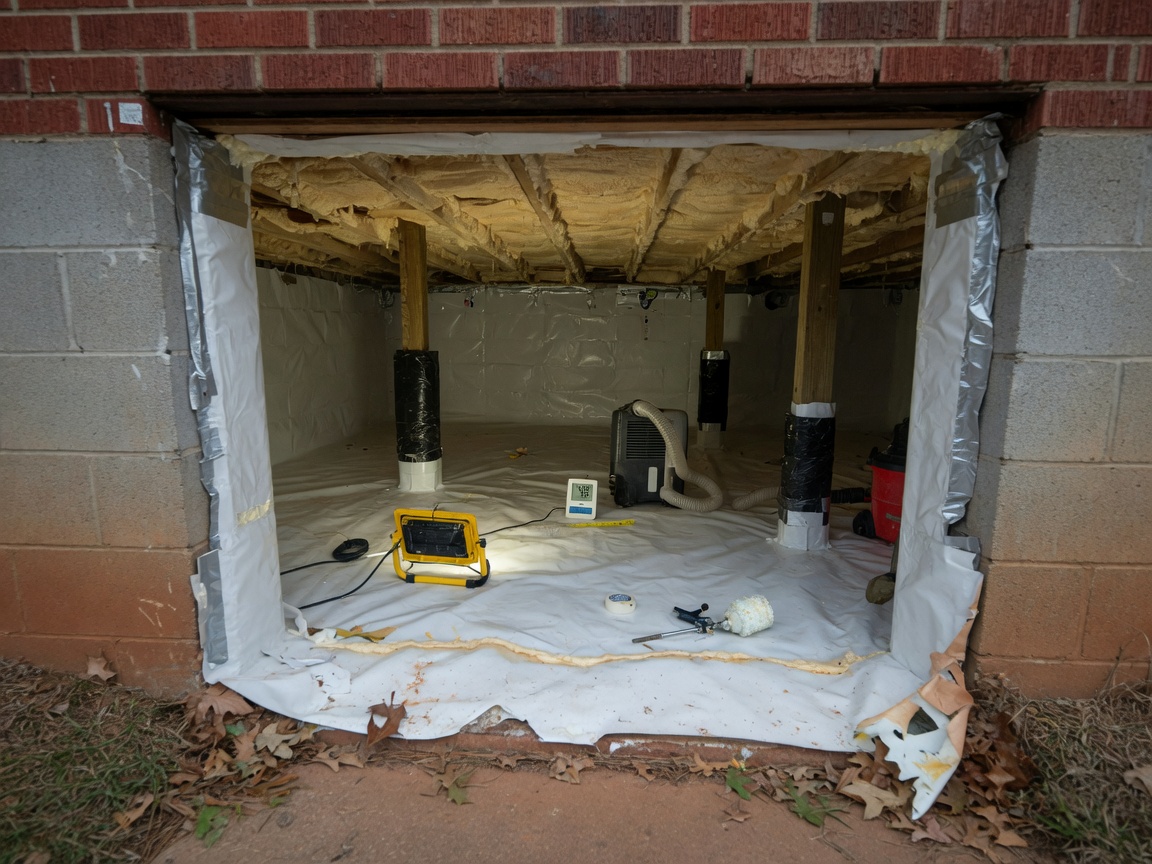
Crawl space encapsulation in Broken Arrow typically costs $2,500 to $7,500 for most single-family homes, delivers moisture control and energy savings in the humid subtropical climate, and becomes necessary once homeowners notice persistent musty odors, visible mold, or wood rot in crawl spaces under houses in neighborhoods like Downtown Broken Arrow and Indian Hills.
Typical Costs for Broken Arrow Homes
Costs vary by home size and crawl space condition. A 1,200-square-foot crawl space often falls in the $3,000 to $5,000 range when a 6-mil vapor barrier, sealed vents, and dehumidifier installation are included. Larger 2,000-square-foot spaces in Forest Ridge or Arrowhead commonly reach $5,500 to $7,500 because additional insulation and drainage corrections add labor. Homes near Ray Harral Nature Park frequently require extra grading work due to higher water tables after heavy spring rains. Factors such as limited access under older Tulsa County foundations and the need for 2-inch closed-cell foam on rim joists push totals higher. Homeowners in nearby Coweta and Bixby report similar pricing when crews travel from the 1158 N Birch Ave shop.
Key Benefits for Local Housing Stock
Encapsulation stops humid air from entering crawl spaces during hot summers, which reduces HVAC runtime by 15 to 20 percent in Broken Arrow homes. It also prevents condensation on ductwork and floor joists that leads to cupping hardwood floors above. In mild winters, the sealed environment keeps pipes from freezing in Lynn Lane properties built before 1980. The process improves indoor air quality by blocking soil gases and allergens that rise into living spaces. Properties near Bass Pro Shops and the Broken Arrow Performing Arts Center see fewer pest intrusions once vents are sealed and entry points are foamed. These gains hold across Tulsa County where clay-heavy soils retain moisture year-round.
Signs You Need Encapsulation Now
Watch for standing water after rainfall, sagging insulation between joists, or white efflorescence on concrete walls in homes across Arrowhead and Forest Ridge. Musty smells that intensify in July and August indicate high relative humidity above 60 percent. Warped baseboards or buckling laminate in first-floor rooms often trace back to crawl space moisture. Older Downtown Broken Arrow houses with dirt floors and no vapor barrier show accelerated wood decay within five to eight years. If family members experience increased allergy symptoms during humid months, testing crawl space humidity provides a clear next step before damage spreads to subflooring.
How the Process Works in Tulsa County Conditions
Crews begin by removing debris and old insulation, then install a reinforced vapor barrier sealed to foundation walls and piers. Closed-cell spray foam is applied to rim joists and any exposed ductwork to create a continuous thermal break suited to hot summers. A dehumidifier sized for 50 to 70 pints per day maintains 45 to 55 percent humidity. Drainage corrections such as French drains become necessary on sloped lots in Indian Hills. The work typically takes two to four days and integrates with existing Crawl Space Encapsulation services. Homeowners in Bixby often combine this with attic upgrades for whole-house performance.
When Encapsulation Pairs With Other Insulation Upgrades
Many Broken Arrow properties benefit when crawl space work occurs alongside garage or metal building projects. Sealing the crawl space first prevents moisture from migrating into attached garages where vehicles are stored. Readers exploring similar upgrades can review Garage Spray Foam Insulation: What Broken Arrow Homeowners Should Know for details on shared moisture strategies. The same approach applies to metal shops in Coweta where condensation forms on uninsulated walls during temperature swings.